
Quick Summary:
- Transforms Academic Learning into Job Skills – Converts theory-based education into real-world, practical competencies.
- Builds Industry-Ready Professionals – Trains students on real tools, workflows, and business environments.
- Drives Technology & Skill Transformation – Aligns learning with AI, automation, and digital industry needs.
- Creates Career-Oriented Job Readiness – Prepares learners for real roles, not just degrees.
- Builds Future-Ready Careers – Develops adaptability, problem-solving, and long-term career growth skills.
Today, many Indian students graduate with degrees but still struggle to meet industry expectations. This blog will explore how professional courses for students and career courses after graduation help bridge the real gap between college education and job-ready skills. We will discuss the problems in the current education system, the growing skill gap, the importance of industry-oriented learning, how professional courses solve real-world challenges, career opportunities they create, and how students can choose the right learning path for success in the Indian job market.
The Gap Between College Education and Industry Needs
Most college curricula in India are designed around theory. Students learn concepts, definitions, and academic frameworks, but they rarely get hands-on exposure to real-world tools, technologies, and working environments. Practical learning, live projects, internships, and industry interactions are often limited or missing.
As a result, students graduate with good marks but lack confidence in applying their knowledge. Employers, on the other hand, want candidates who can solve real problems, work in teams, handle pressure, and adapt quickly to changing technologies. This mismatch creates frustration on both sides — students feel unemployable, and companies feel there is a talent shortage.
Why Industry Skills Matter More Than Ever
The job market today is changing faster than ever before. Automation, AI, data science, digital marketing, cloud computing, fintech, and health tech are transforming every industry. Traditional degrees alone are no longer enough to keep up with these changes. Companies are now hiring based on skills, not just qualifications. They look for candidates who understand tools, workflows, industry standards, and business processes. This is where structured skill-based learning becomes critical. Students need training that is practical, updated, and aligned with industry expectations.
Technology is also reshaping career paths and skill requirements across industries. To understand how modern technologies are transforming careers and what skills students must focus on today, you can explore this detailed guide. This blog explains how AI, automation, and digital transformation are redefining career opportunities and why continuous upskilling is becoming essential for students.
How Professional Courses Bridge the Skill Gap
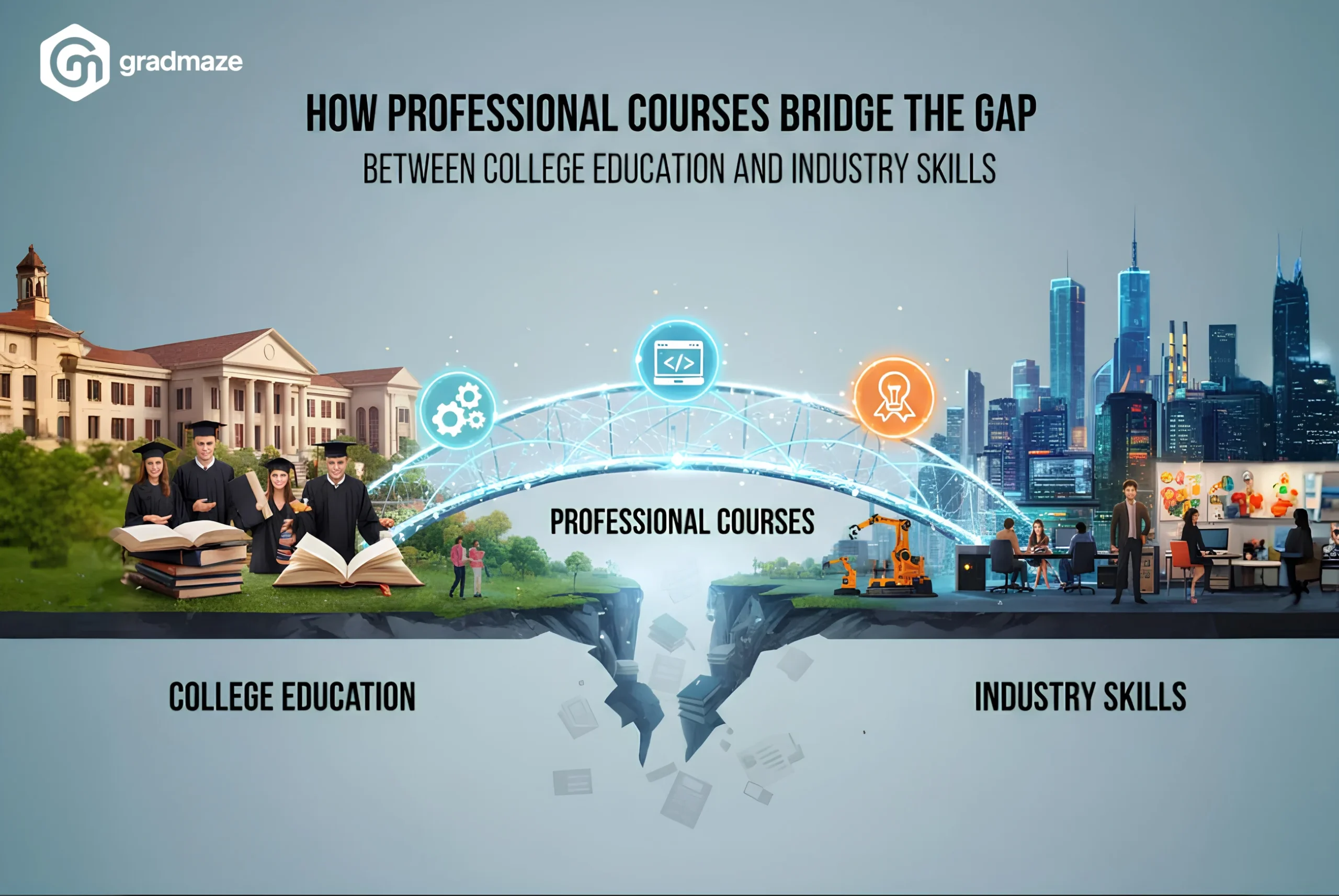
Professional courses for students act as a strong bridge between classroom learning and real industry needs by combining career-oriented training, technology-driven learning, and future-focused skills into one structured path. Instead of focusing only on theory, these programmes prepare students for real work environments by exposing them to practical tools, modern technologies, and professional workflows used in industries today. This helps learners move beyond concept-based learning and develop real job-ready capabilities where knowledge is applied, not just memorised.
Technology plays a key role in this transformation. With AI, automation, cloud systems, and digital platforms reshaping every sector, students are trained on current tools and systems that companies actually use, making them industry-relevant from day one. At the same time, these courses help in building future-ready careers by developing adaptability, problem-solving skills, and continuous learning habits. Students are not just prepared for their first job, but for long-term career growth in a fast-changing job market.
Professional learning bridges the gap in multiple ways, creating a strong foundation for industry readiness and long-term career growth:
1. Practical Training
Students move beyond textbooks and classrooms into real application. They work on practical exercises, simulations, and real-time problem-solving activities that help them understand how concepts are used in actual workplaces. This builds confidence, clarity, and real skill development instead of rote learning.
2. Industry Tools
Professional courses introduce learners to the same tools and platforms used in companies. This includes industry software, digital platforms, automation tools, and workflow systems. Students graduate with experience, not just knowledge, making them immediately valuable to employers.
3. Live Projects
AI has introduced new hybrid roles such as:
Students work on real-world projects based on actual industry problems. These projects help them understand deadlines, teamwork, decision-making, client expectations, and professional accountability. It creates real exposure to workplace pressure and responsibility.
4. Career-Oriented Training
Learning is structured around real job profiles and industry roles. Instead of generic education, students develop role-specific skills that match market demand. This ensures alignment between learning outcomes and employment opportunities.
5. Mentorship
Mentors provide real-world insights, career guidance, and practical advice. Students learn from professionals who have industry experience, helping them understand workplace culture, expectations, and growth pathways.
6. Technology Integration
Courses are designed around modern technologies such as AI, automation, data systems, and digital platforms. This ensures students are not learning outdated content but are prepared for the future of work and emerging industries.
7. Career Readiness Support
Students receive structured support for interviews, resume building, portfolio creation, communication skills, and professional confidence. This complete preparation helps them transition smoothly from learning to employment.
This structured and integrated approach transforms students into professionals who are not only employable but future-ready, capable of adapting, growing, and succeeding in a rapidly changing industry environment.
Conclusion
In today’s competitive world, a degree alone is not enough. Students need skills, exposure, confidence, and industry understanding to succeed. Professional education plays a crucial role in transforming academic knowledge into real-world capability. By choosing the right learning path, students can build strong, stable, and future-proof careers. The right guidance, training, and mentorship can completely change a student’s career journey.
If you are looking for the right direction, guidance, and support to choose the best learning path for your career, connect with us today. Our team will help you identify the right opportunities and skill-building programmes based on your goals. Get in touch with us. Start your journey towards a skill-driven, industry-ready career today.
Frequently Asked Questions
1. What are professional courses for students?
Professional courses for students are structured learning programmes designed to teach practical, industry-relevant skills alongside academic knowledge. These courses focus on real-world application, hands-on training, industry tools, and job-specific learning rather than just theory. They help students understand how industries work, prepare them for real job roles, and make them confident in applying knowledge in professional environments. This makes students more employable and career-ready.
2. Why are professional courses important after college?
Professional courses are important after college because many graduates lack real-world skills required by employers. While college education builds theoretical knowledge, professional learning focuses on practical exposure, job readiness, and industry understanding. These courses help students bridge the gap between education and employment by teaching real tools, workflows, and business processes. They improve confidence, employability, and career clarity for students entering the job market.
3. How do professional courses improve employability?
Professional courses improve employability by providing hands-on training, industry exposure, live projects, and practical skill development. Students learn how to apply concepts in real business scenarios, not just in exams. They also gain experience with industry tools and technologies, making them workplace-ready. This combination of skills, confidence, and practical knowledge makes candidates more attractive to employers and increases job opportunities.
4. What is the difference between degree education and professional courses?
Degree education mainly focuses on academic theory, concepts, and subject knowledge, while professional courses focus on practical skills and industry application. College teaches what to learn, but professional learning teaches how to apply it in real jobs. Professional courses include hands-on training, real projects, industry tools, and job-oriented learning, making students ready for employment and real workplace challenges.
5. Who should take career courses after graduation?
Career courses after graduation are ideal for students who feel unprepared for the job market, want better job opportunities, or wish to change their career path. They are also useful for graduates who want to upgrade their skills, move into high-demand industries, or gain industry exposure. These courses help students realign their careers with market demand and improve long-term growth prospects.
6. Do professional courses guarantee jobs?
Professional courses do not guarantee jobs, but they significantly improve job readiness and employability. They provide skills, confidence, practical experience, and industry understanding that employers look for. Students become more capable, adaptable, and prepared for interviews and real work environments. While placement depends on performance and opportunities, professional learning greatly increases the chances of getting quality job opportunities.
7. How do professional courses help in long-term career growth?
Professional courses help in long-term career growth by building adaptable skills, problem-solving abilities, and continuous learning habits. Students learn how to evolve with changing technologies and industries. Instead of preparing only for the first job, these courses prepare students for career progression, leadership roles, and future opportunities. This creates career stability, growth potential, and long-term professional success.
8. Are professional courses useful for non-technical students?
Yes, professional courses are highly useful for non-technical students as well. Fields like digital marketing, business analytics, finance, HR, management, design, and operations all require practical skills. These courses help non-technical students gain industry exposure, job-specific skills, and professional confidence. They open multiple career opportunities across sectors and help students build strong, industry-relevant career paths.
9. How do professional courses support future careers?
Professional courses support future careers by preparing students for evolving industries and changing job roles. They integrate modern technologies, industry tools, and future-focused learning models. Students develop adaptability, digital skills, and continuous learning ability, which are essential for long-term career sustainability. This helps them stay relevant in a fast-changing job market and build stable, future-proof careers.
10. When should students start professional learning?
Students can start professional learning during college or after graduation, depending on their career goals. Starting early helps build skills alongside academics, while starting after graduation helps correct skill gaps and improve job readiness. The right time depends on personal readiness, career clarity, and market demand. Early skill development always creates better career opportunities and long-term advantages.